How to Teach Your Child the Alphabet
5 min read · Play Learn Grow guides
Most children learn the alphabet between ages 2 and 5 — and the ones who learn it fastest almost never learn it in order. Here's the approach early-years teachers actually use.
Start with their name, not with A
A child's own name is the most motivating word in their world. The letters in 'Noah' matter to Noah. Begin there: point at the letters, say their sounds, trace them big. Once the name letters stick, add the letters of family members and favourite things (D for dinosaur).
Teach sounds before letter names
'Buh' is more useful than 'bee' when it's time to read. When you show a letter, say its sound first, its name second. Short, playful bursts win: one letter a day is plenty at age three.
A ten-minute daily routine
- 2 min — find the letter: spot it in a book title or on a cereal box
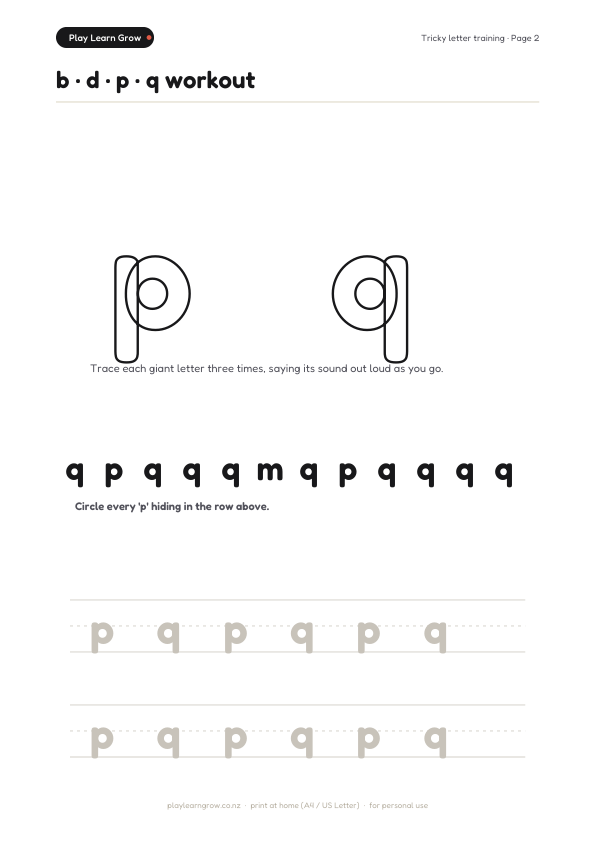
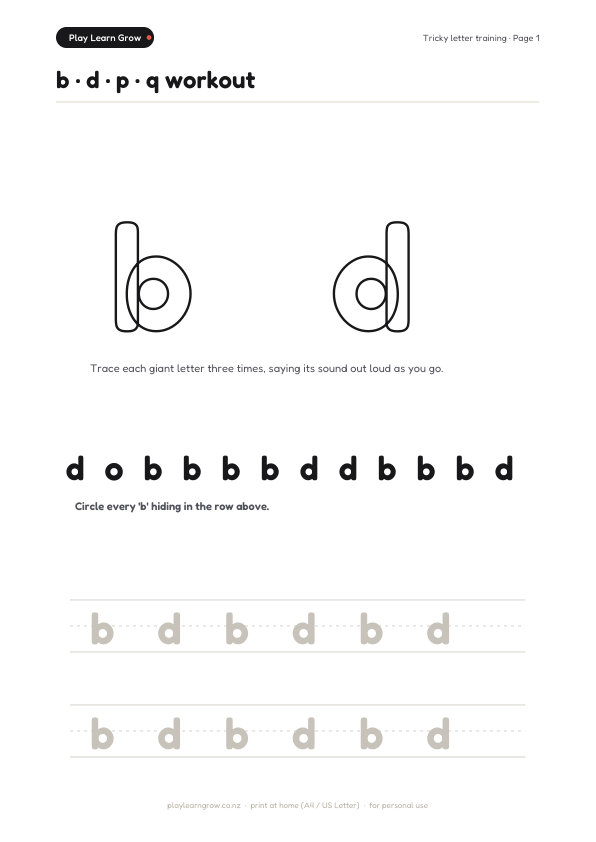
- 3 min — trace it: a big hollow letter with a chunky crayon, then guided rows
- 2 min — say its sound and think of three words that start with it
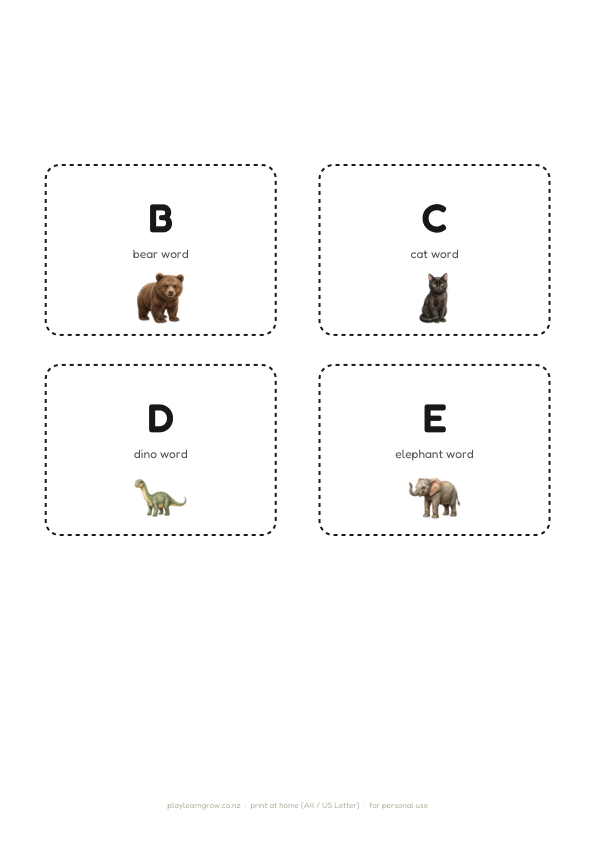
- 3 min — colour the letter's picture friend (bear for B, cat for C)
Mistakes to avoid
- Drilling the whole alphabet at once — overwhelm kills interest
- Correcting grip constantly — praise the attempt first, adjust gently
- Mixing capitals and lowercase randomly — start with capitals (they're easier), then pair them
A full A–Z tracing pack gives you one letter per page: a big hollow letter to colour, guided rows, and a matching friend. Ten calm minutes a day beats an hour-long battle every time.
Make it easy
Printables for exactly this.
 Printables From $0.50
1 pages · ages 4-7
$0.30
 Printables From $0.50
1 pages · ages 4-7
$0.30
 Printables From $0.50
1 pages · ages 2-4
$0.30